
Escape Hatch
Felix Beaudry, Samantha Bittman, Chris Edwards
co-curated by Samantha Bittman
September 5th - October 25th, 2026
Opening Reception September 5th 4-7 pm, 2026
Roundabouts Now is delighted to present Escape Hatch, a three person show featuring new work by Felix Beaudry, Samantha Bittman and Chris Edwards.
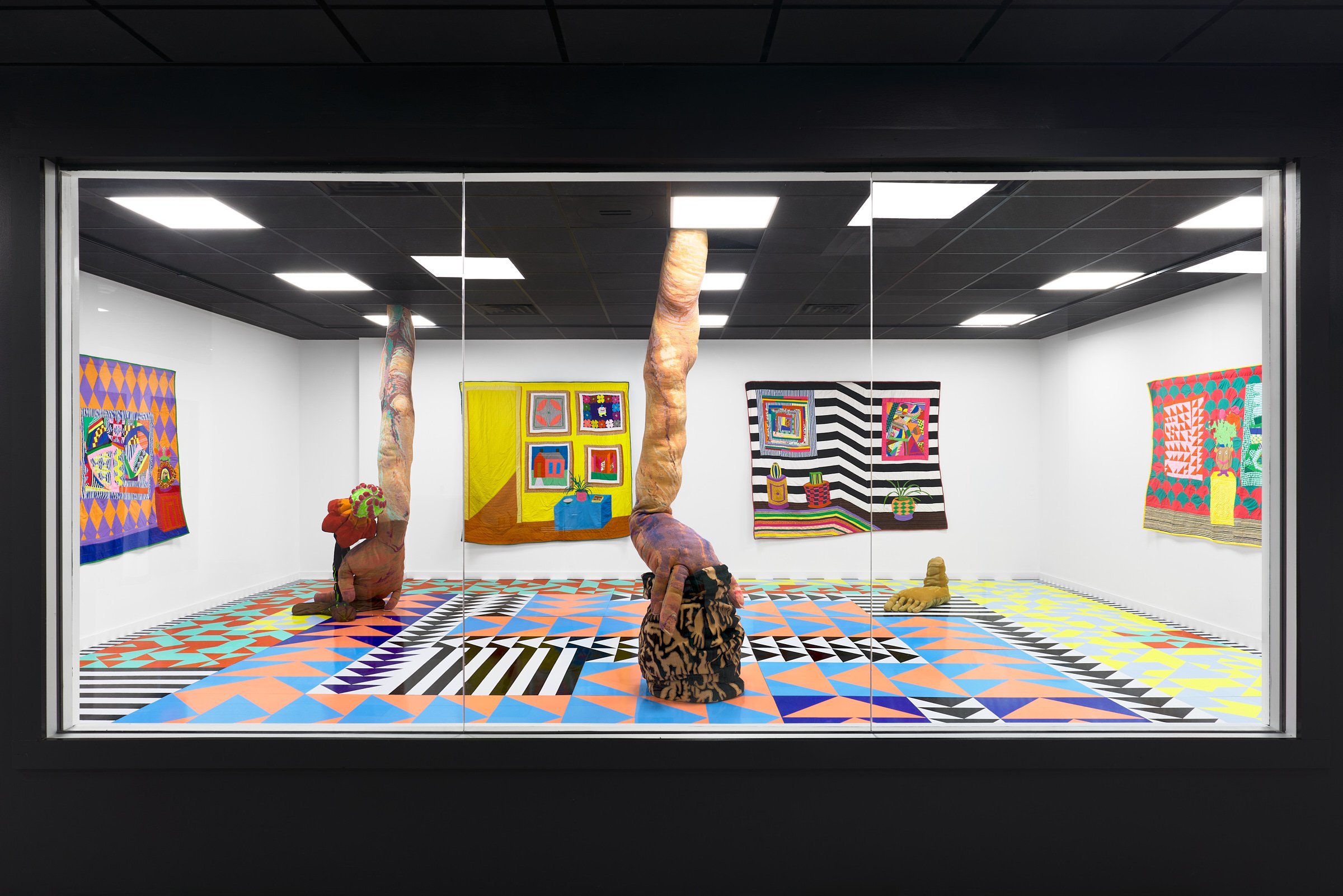
Escape Hatch plays with the idea of art making as a built in means of exiting a high pressure situation but also how sometimes a plot twist can lead to a beginning of something new, a hatching. Each artist in the show has created work that deviates from the prescribed norms of their chosen medium and each delves deeply into the meditative properties of what they are creating - escaping norms but also falling into trance-like focus on stitching, intricate pattern, large scale knitting and sewing, using bright colors that fight against the ever greying world.
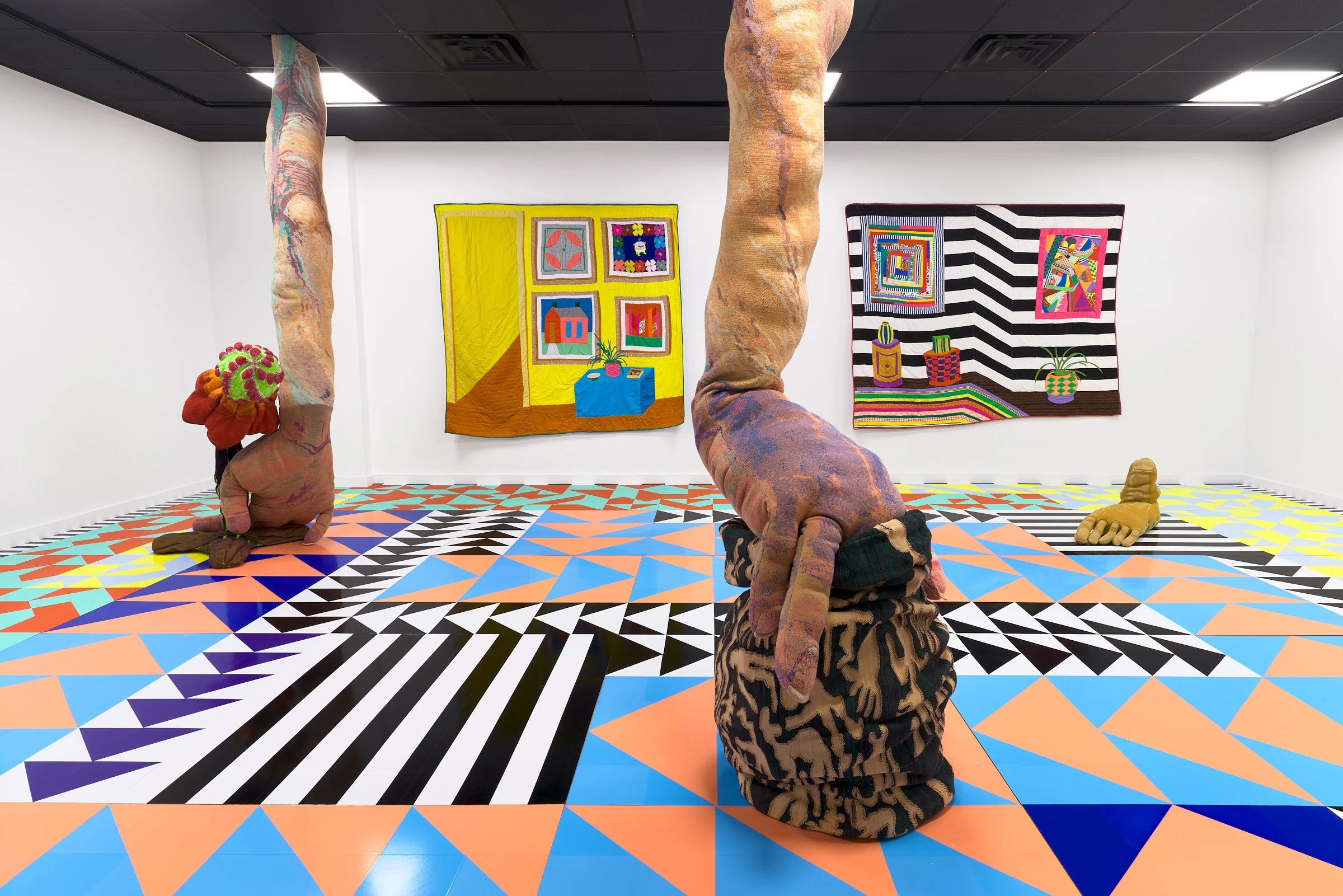
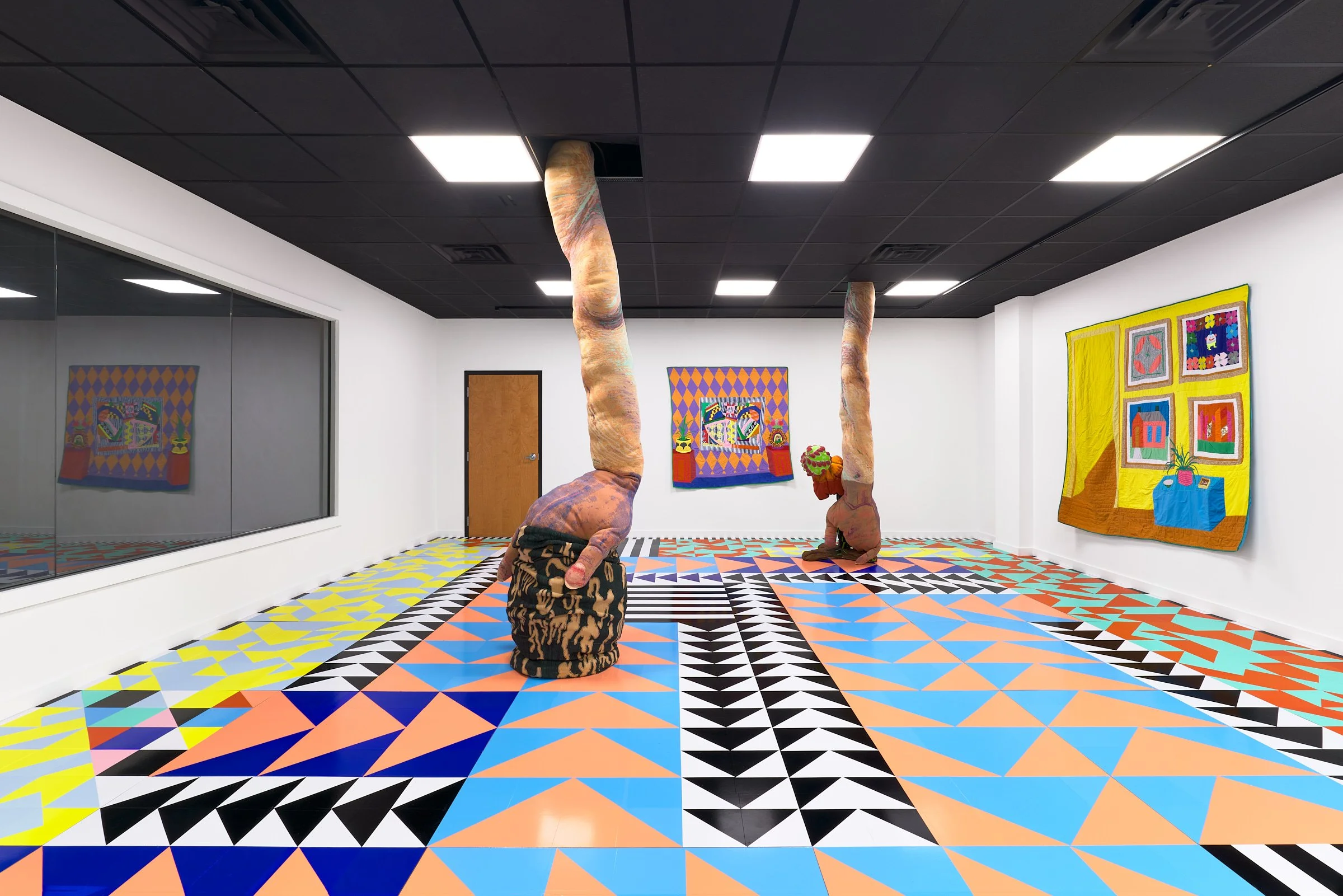
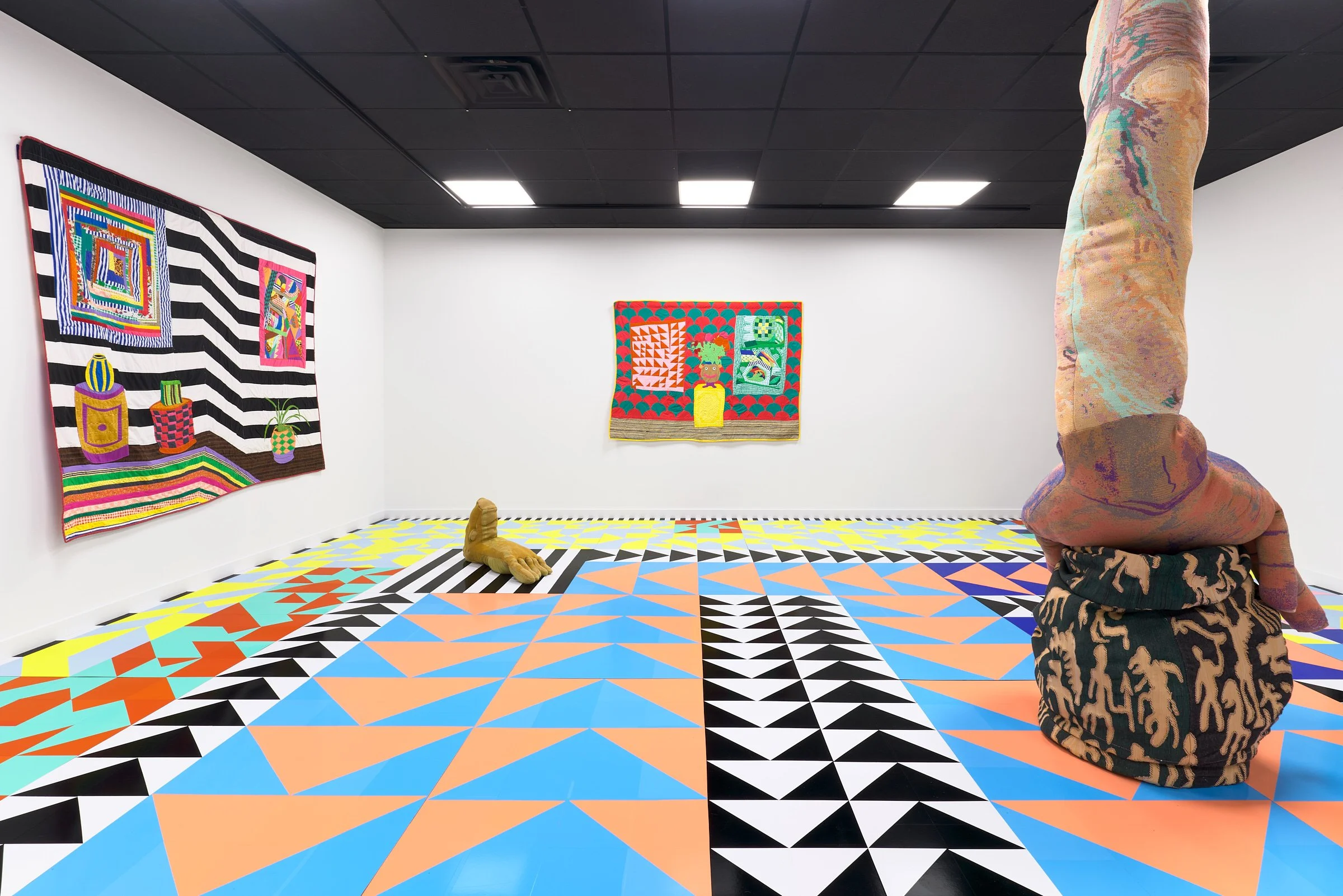
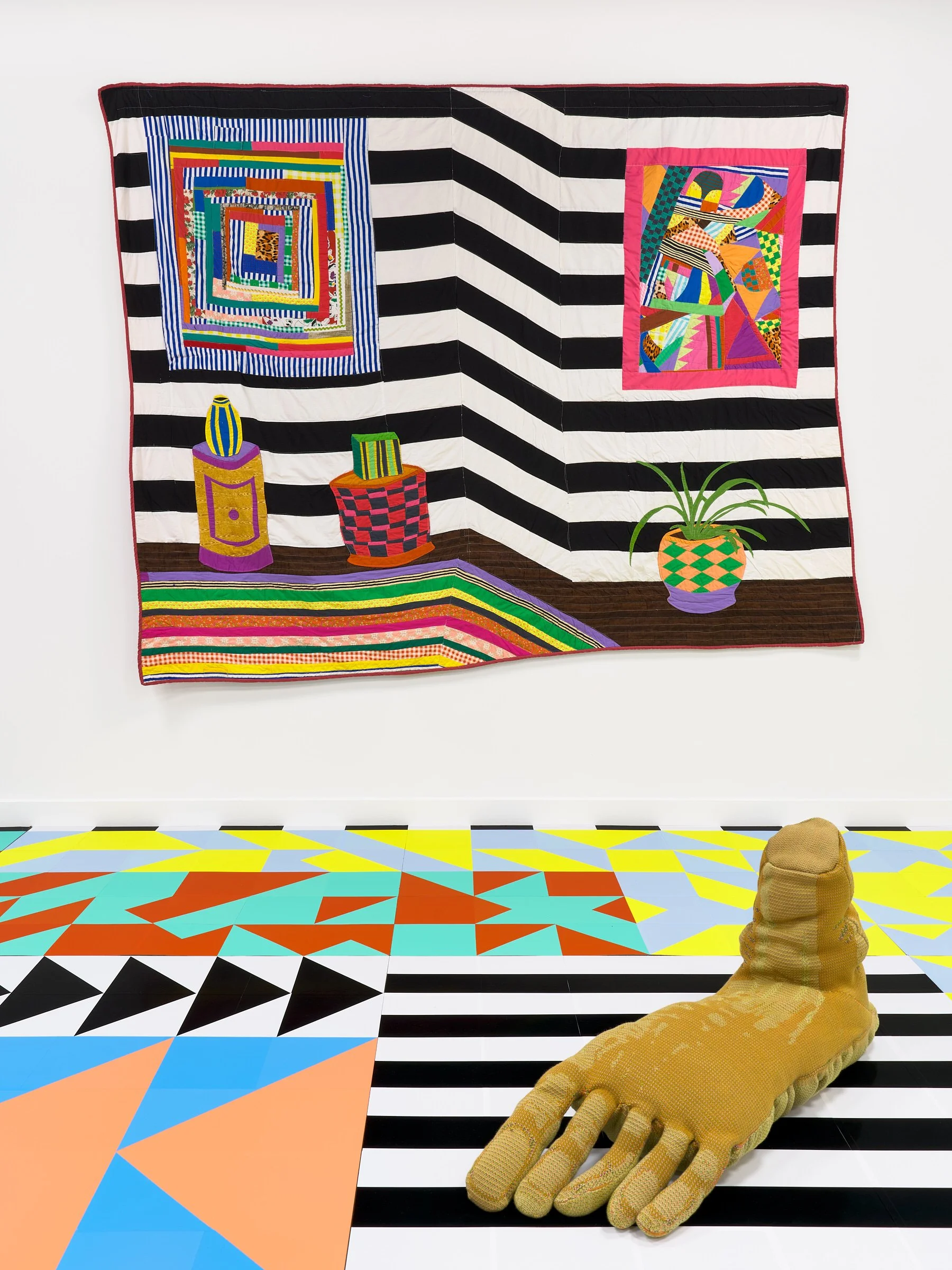
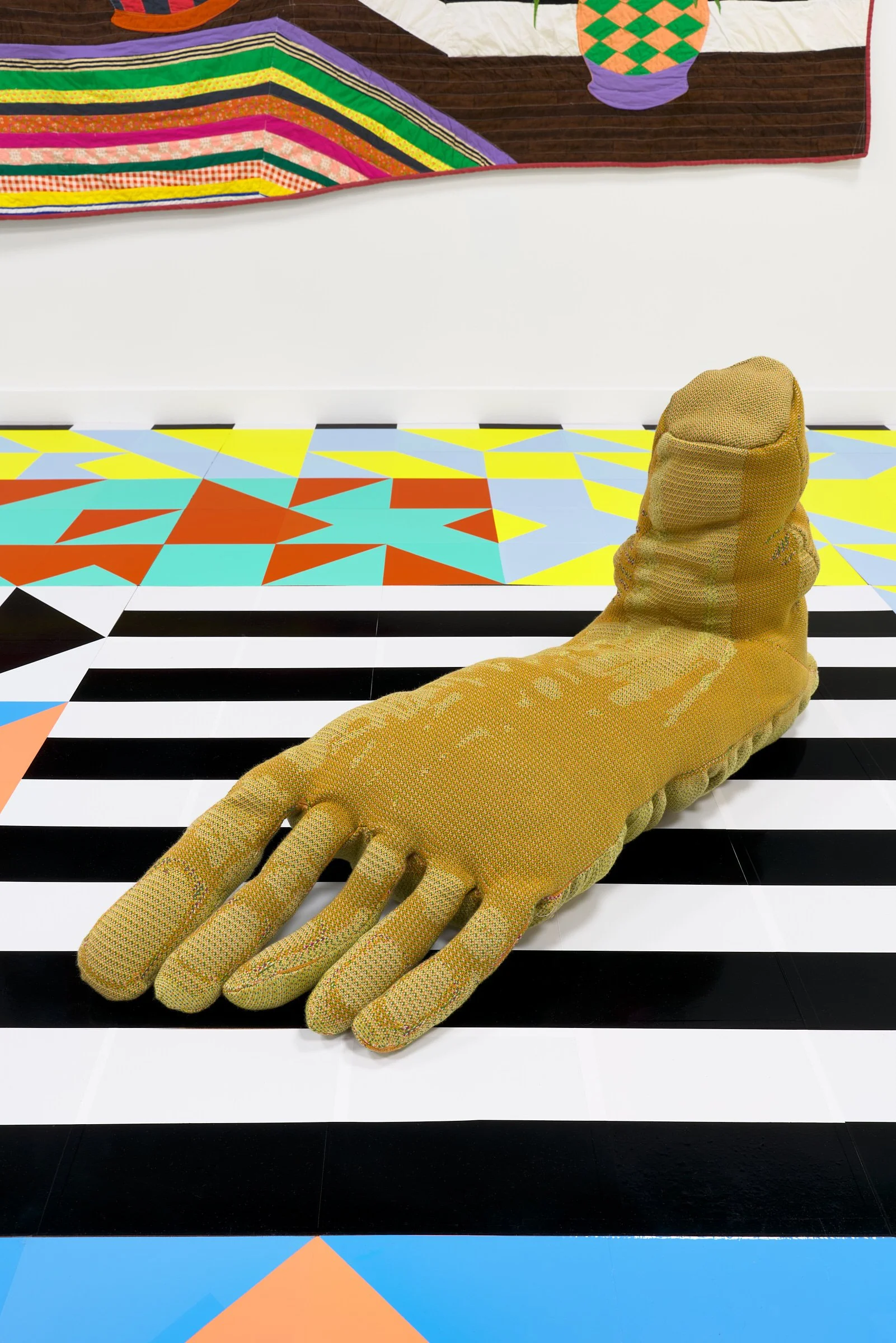
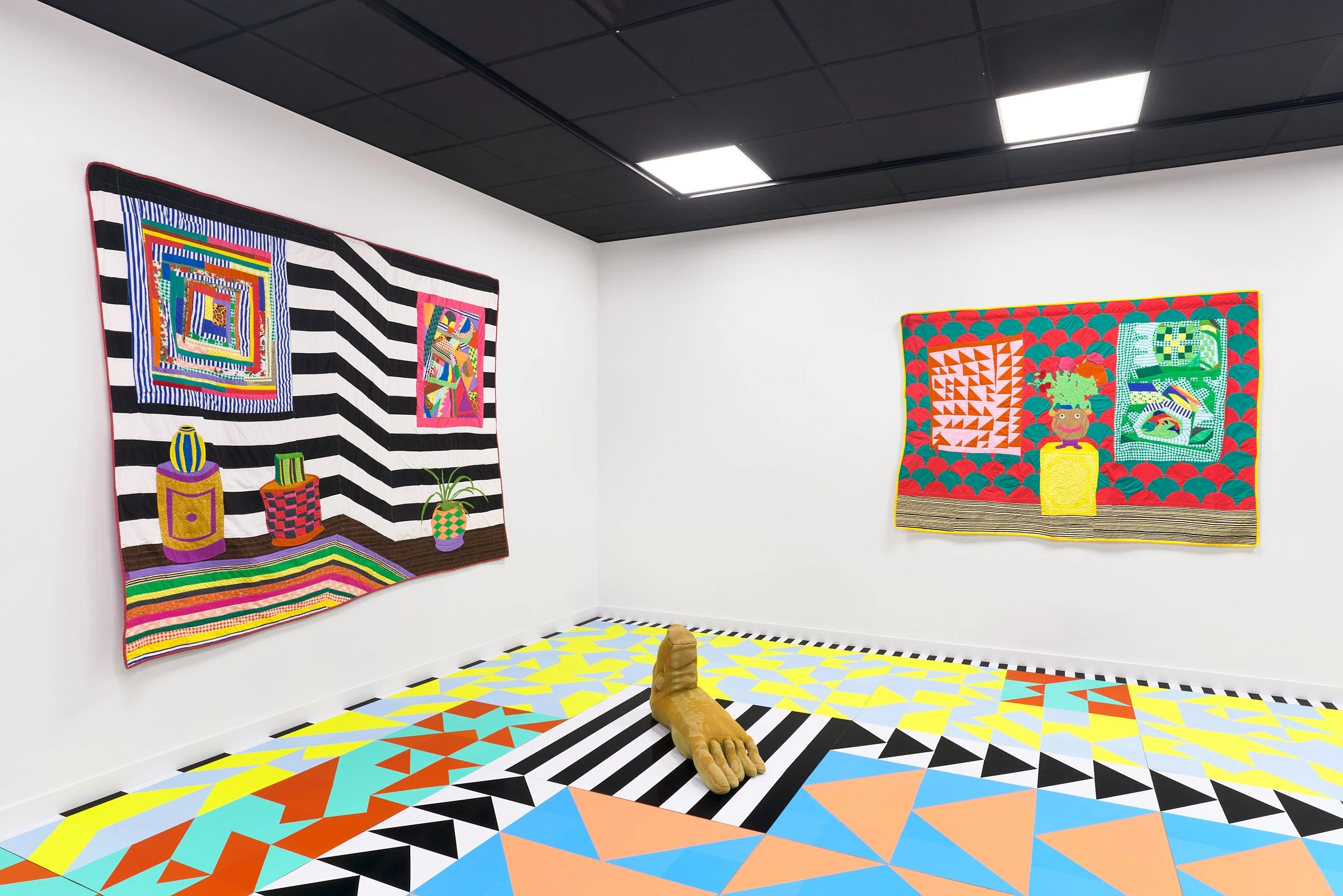
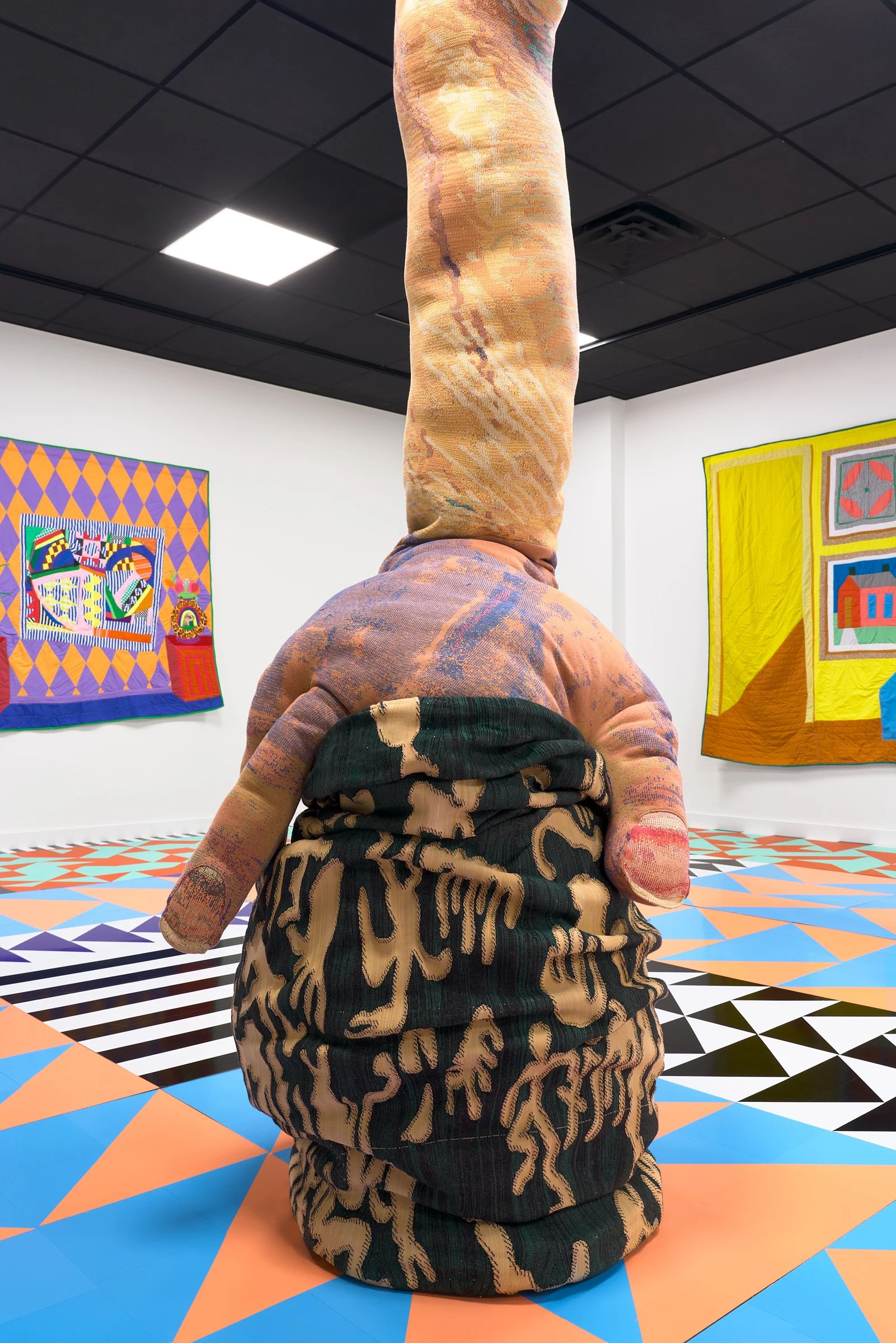
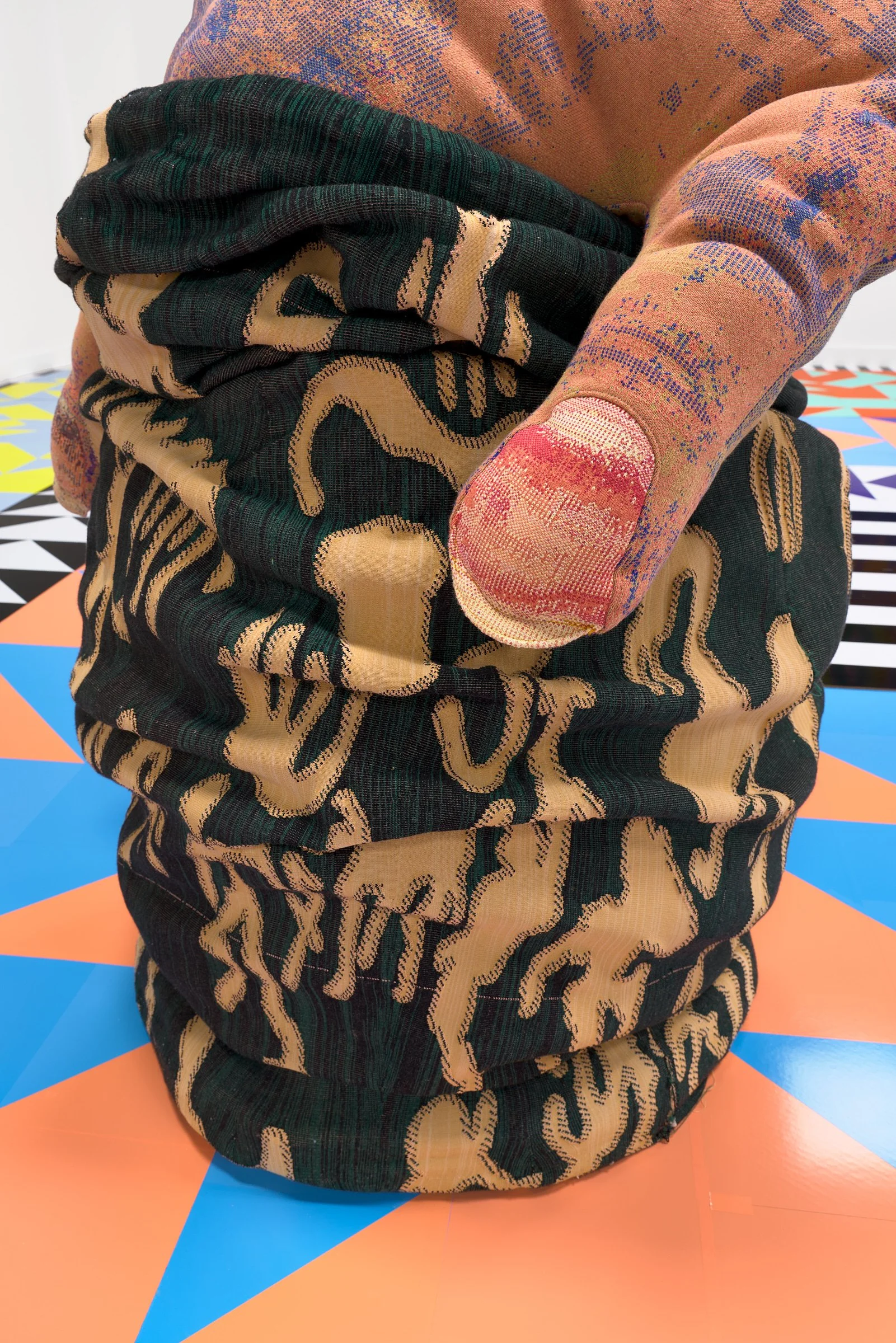
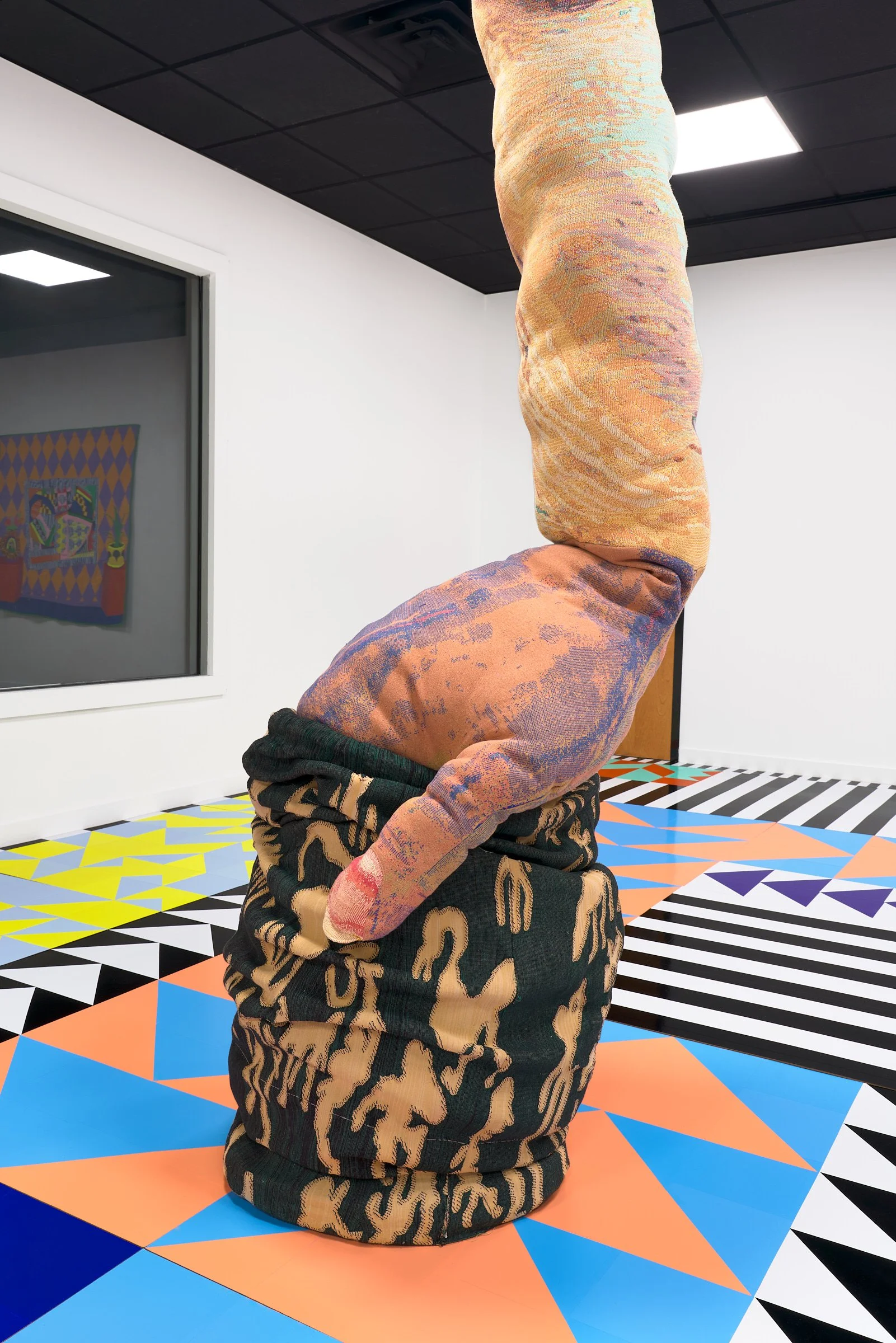
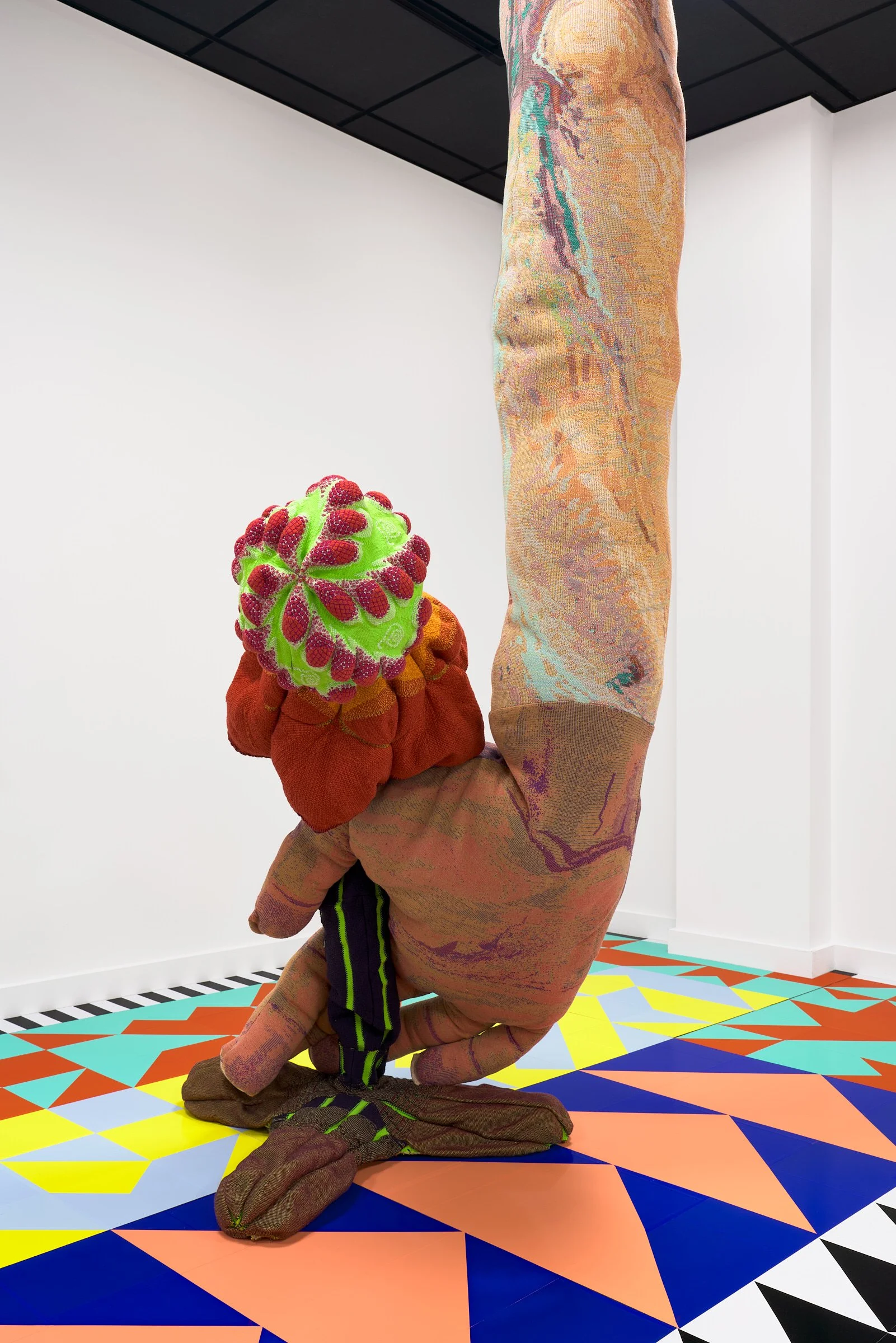
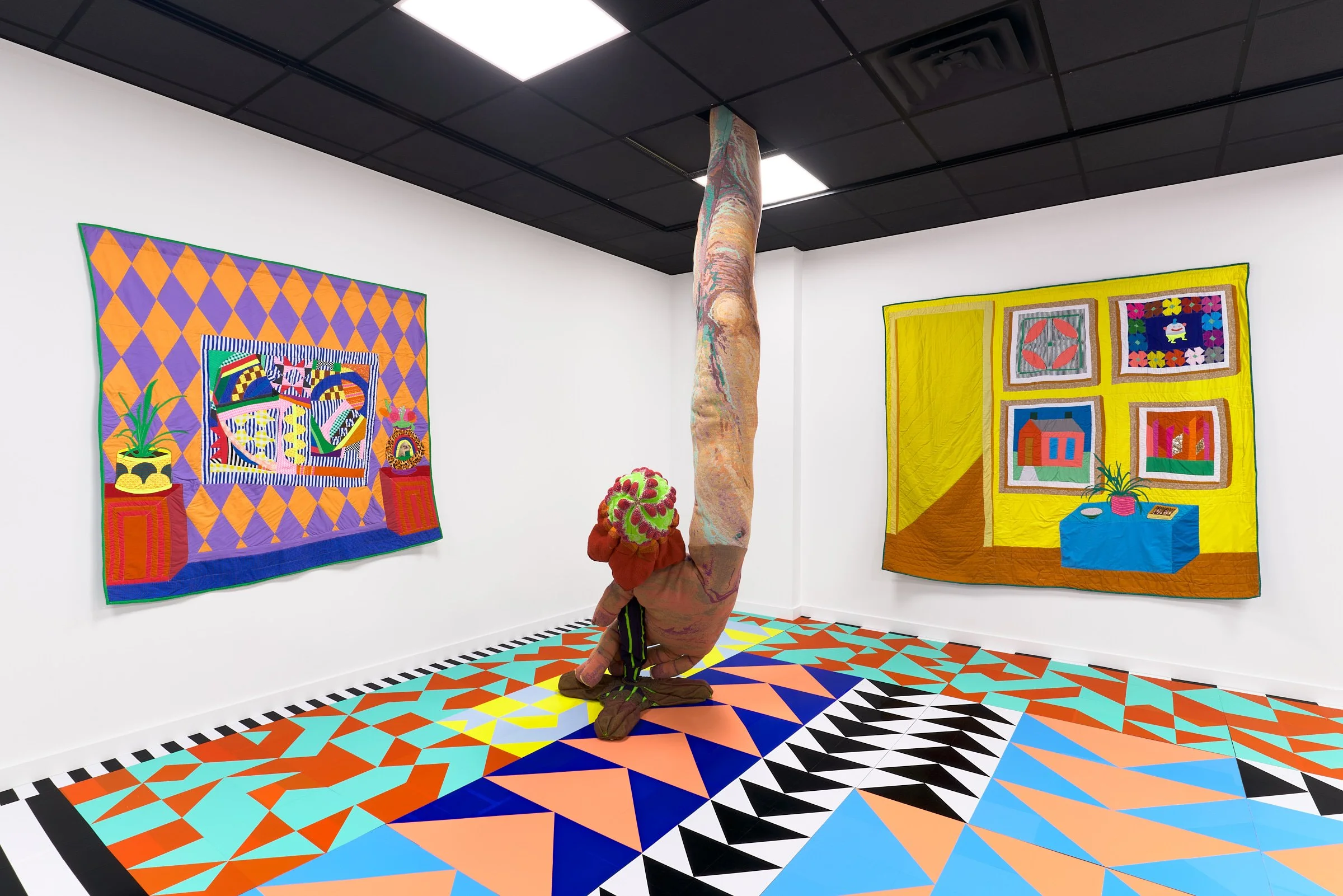
Felix Beaudry uses a unique and rare Stoll knitting machine - normally used for making shaped sweaters and clothing for the textile industry. His process involves creating a drawing in the code of the machine that tells it instead to make the human form. What the machine creates is out of his control and the resulting rift between the object and its plan allows for a sculpture that both resembles its subject and reveals the pathetic nature of all best laid plans. For this show Beaudry has created gargantuan body parts that emerge from the ceiling, reaching into the interior of the gallery like a giant feeling for treasure in a cave.
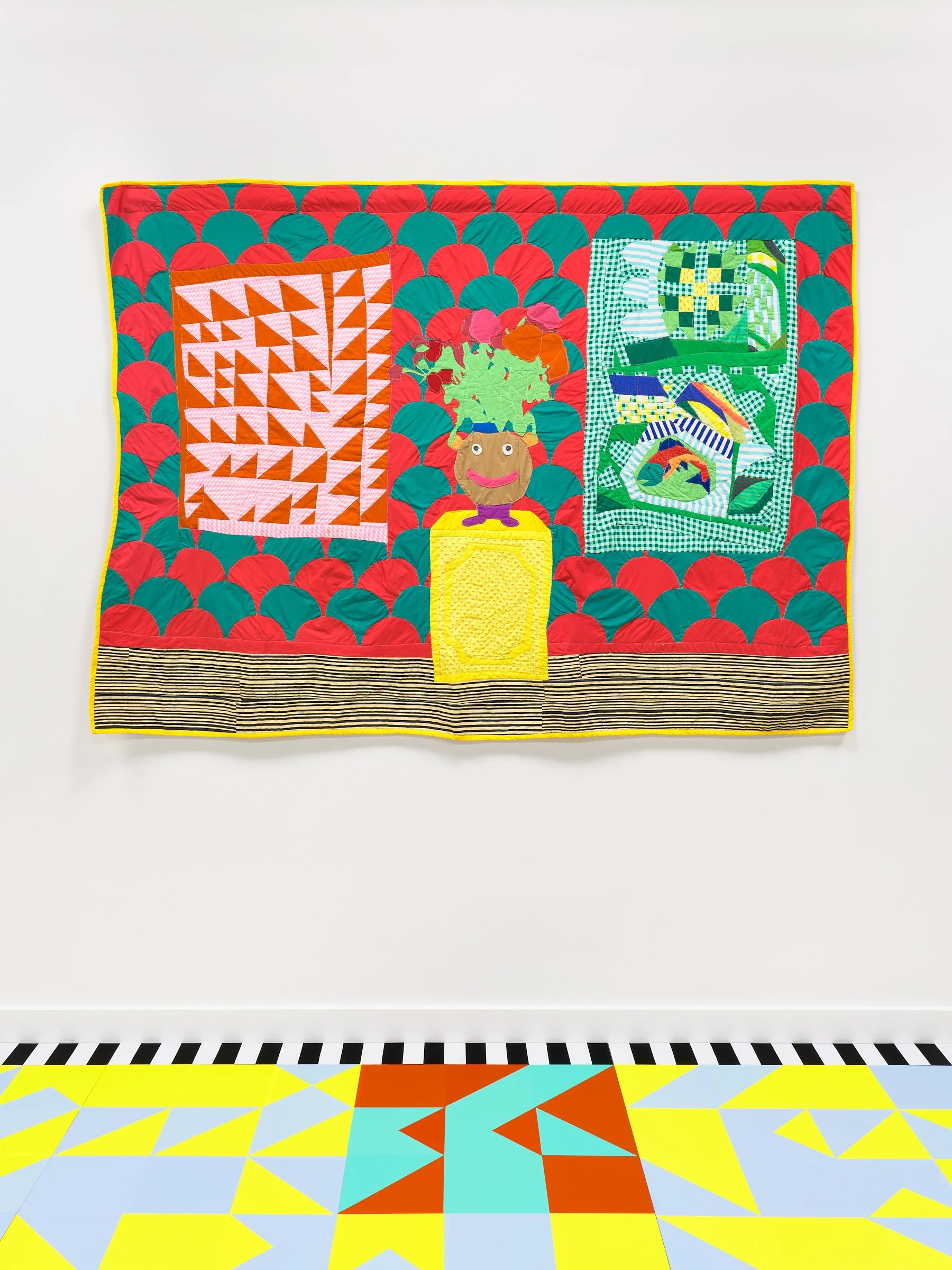
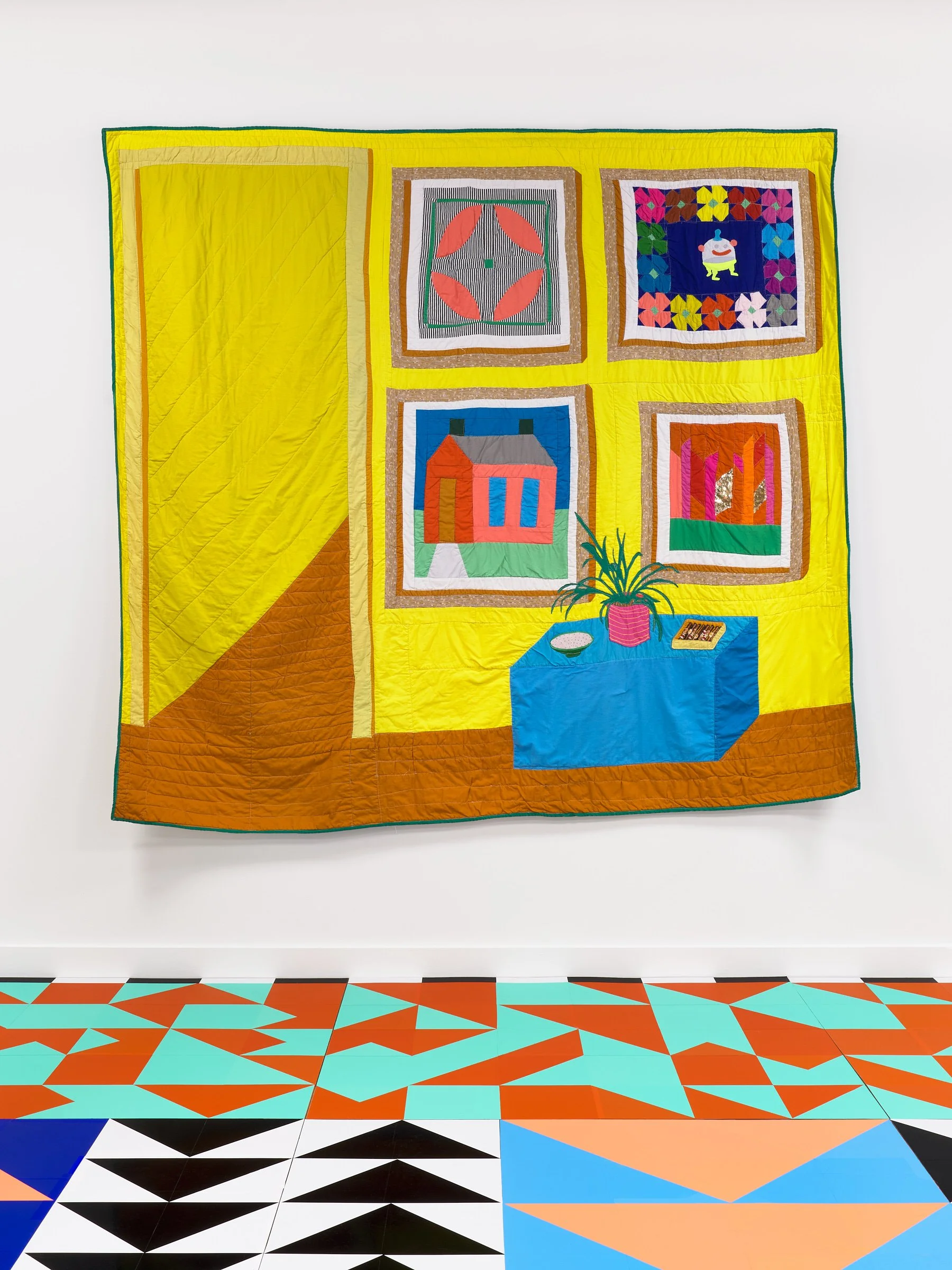
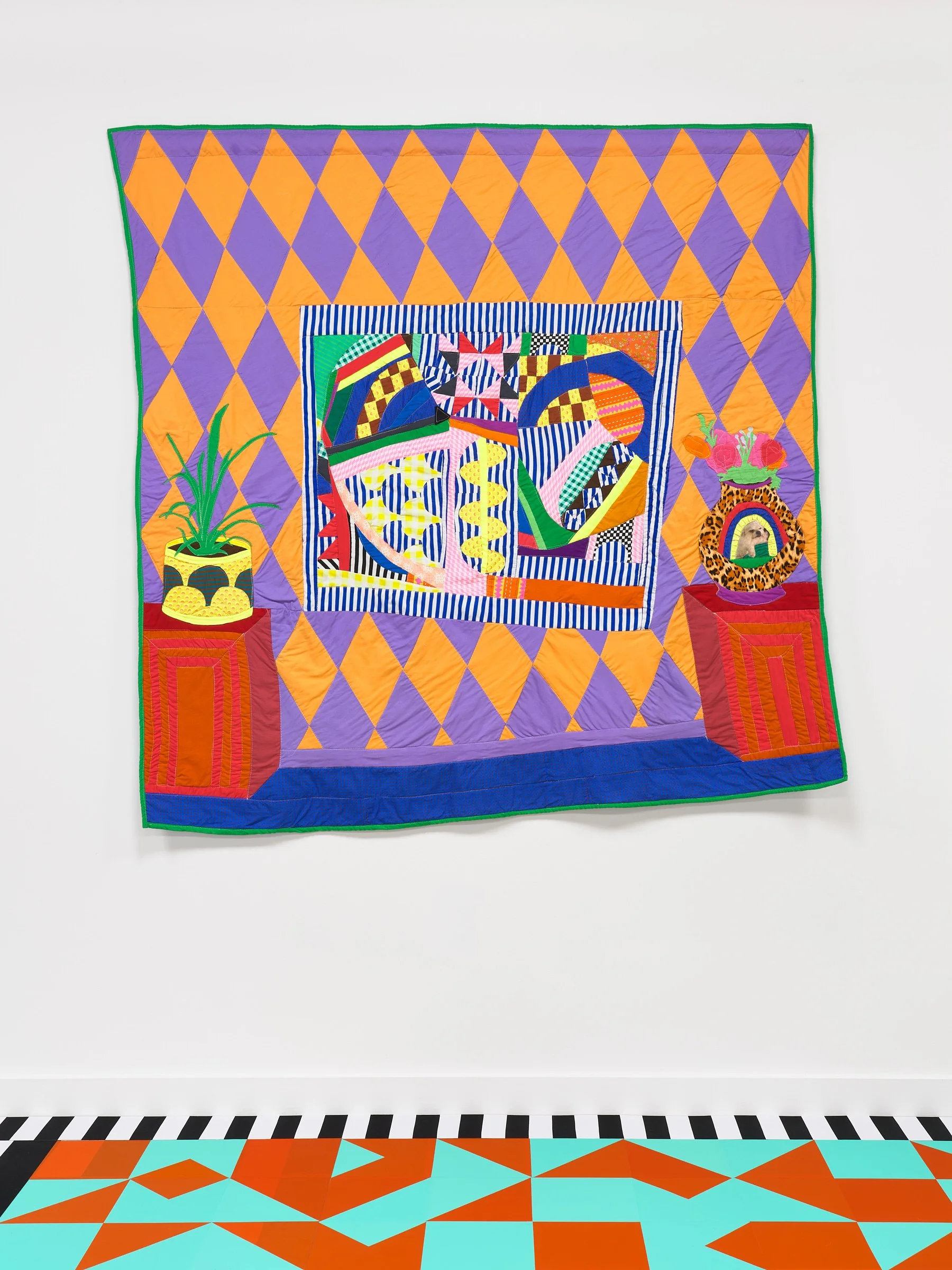
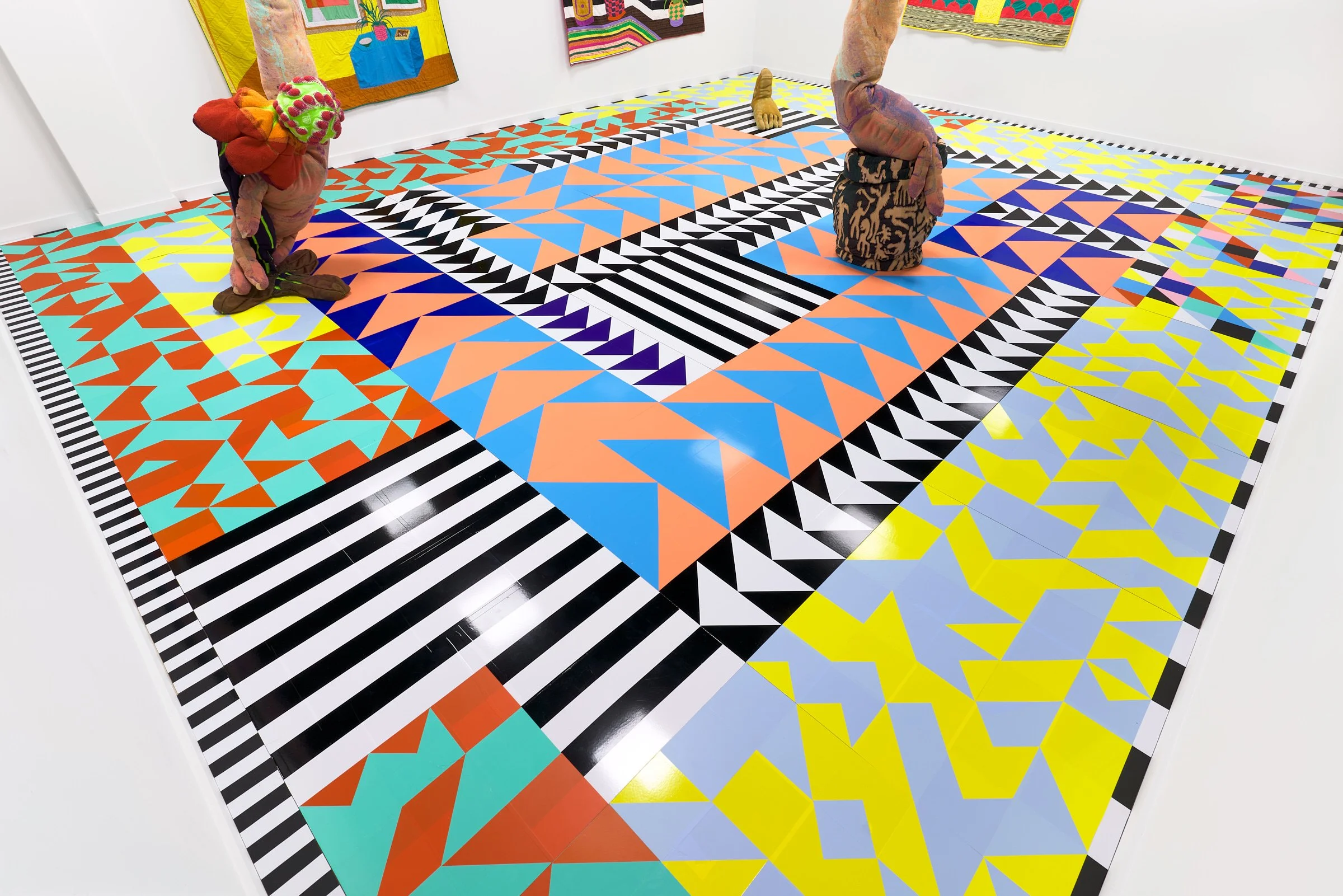
Beaudry’s enormous knit hands and foot rest on a site-specific, hand-cut vinyl tile floor created in the manner of a nine-patch quilt by Samantha Bittman. The classic quilt model gently organizes the shaped elements together as a cohesive whole at the edge of dissolution, becoming a riotous and immersive environment of colorful geometric patterns, echoing the patterned elements of Chris Edward’s quilts. This is the first instance of a full floor installation for Bittman, however, the opticality and perceptual experience are reminiscent of her weavings and paintings.
Viewers walk on the quilt as floor, experiencing a world in which they are morphed into objects in a fantastical scene. Awaiting them on the walls are domestic vignettes created by Chicago based artist Chris Edwards. Edwards’ intricate fabric quilts depict interiors from his own home reimagined. Each quilt is a repository for feelings and memories, sometimes in the form of other quilts and ceramic objects, foster-dogs and cats as well as plants. Edwards’ quilts are a reflection of his greater practice of care for and attention to others. A licensed social worker, they began as a way to physically give his time and attention to others and as a way to enshrine loss, over time they have grown into a practice of memorializing his life through place and objects, an album of sorts that is made to comfort.
Samantha Bittman is an artist and teacher based in Kingston, NY. She holds an MFA in Painting and Drawing from The School of the Art Institute of Chicago, and a BFA in Textiles from Rhode Island School of Design. Recent solo exhibitions include, Various Small Fires, Seoul, South Korea; Ronchini, London, UK; Andrew Rafacz, Chicago, IL; Morgan Lehman, NY, NY; and Greenpoint Terminal Gallery, Brooklyn, NY. Selected group exhibitions include Brooklyn Museum, Brooklyn, NY; Everson Museum of Art, Syracuse, NY; The Dorsky Museum of Art, New Paltz, NY; David Castillo, Miami, FL; Various Small Fires, Los Angeles, CA; Mindy Soloman Gallery, Miami, FL; Shane Campbell, Chicago, IL; and Rhona Hoffman, Chicago, IL. She has completed site-specific installations at the Museum of Arts and Design, NY, NY; Everson Museum of Art, Syracuse, NY; Meta, Chicago, IL; and Google, Chelsea, NY, NY. Selected residency programs include the Josef and Anni Albers Foundation, Sharpe-Walentas Studio Program, Skowhegan School of Painting and Sculpture, Bemis Center for Contemporary Art, Haystack Mountain School of Crafts, Penland, and Ox-Bow School of Art. In 2024, she received the Teaching Artist Cohort Award through the Center for Craft, and in 2012, she received the Artadia Award. In 2022, she founded Catskill Weaving School, an artist-run school that offers in-person and online weaving classes, based in Kingston, and Brooklyn, NY.
Felix Beaudry (b. 1996, Berkeley, CA) is a sculptor and textile artist whose practice centers on the machine-knitted figure as a site of inquiry into embodiment, consciousness, and the increasingly permeable boundary between the human and the technological. Working from his studio in Kingston, New York, Beaudry operates an industrial Stoll knitting machine, typically deployed in mass textile manufacturing, as both his primary instrument and conceptual framework. Beaudry has presented solo exhibitions at SITUATIONS, New York, NY (2026; 2023; 2020); A Hug From The Art World, New York, NY (2024); Athens Cultural Center, NY (2024); and Tatjana Pieters, Ghent, BE (2023). Select group exhibitions include Second Skin, curated by Estrellita Brodsky, Southampton Arts Center, NY (2025); The Lady and the Unicorn, curated by Fabienne Stephan, Salon 94 (2025); After Paradise, Triennial Kortrijk, Historisch Stadhuis, BE (2024); Purple Prose, curated by Kory Trolio, Marianne Boesky, New York, NY (2023); and The Bunker Artspace, curated by Beth Rudin DeWoody, Palm Beach, FL (2023). In addition to numerous international private collections, Beaudry’s work is collected by The Bunker Artspace, Palm Beach; The Hall Art Foundation, Reading, VT; and Kunstmuseum Schloss Derneburg, Hamburg, DE.
Chris Edwards is an artist and Licensed Clinical Social Worker living and working in Chicago, primarily working in quilting and ceramics. He received his MFA in Painting and Drawing from SAIC in 2011 and his Master of Social Work from the University of Iowa in 2014. He lives with his husband, dog, and two cats. He has taught at Ox-Bow School of Art and Artists’ Residency and has exhibited work at Roundabouts Now, McClean County Arts Center, Western Exhibitions, Ox-Bow House, Wrong Marfa, Elephant Gallery, Adds Donna, Tusk), LVL3, Oggi Gallery, Dreamboat, Julius Caesar, and an upcoming show at the Art Center Sarasota.